
Engineers decide. Agents deliver.
The intent layer for compliant agentic engineering in safety-critical industries.
Shared intent is what makes agentic engineering not only possible, but safe. One x-as-code source of truth across requirements, code, and tests closes the gap between your system of record and your system of work.
Trusted by industry leaders everyday











What slowed your engineers down for years now blocks the help meant to speed them up.
A scattered toolchain keeps your data in silos and stops agents from helping you.
Neither better tools nor generalist agents will help you. It takes a structural change in how the toolchain serves the process to increase productivity: one layer, zero silos, and a foundation agents can finally build on.
Acceptance Testing
Prepare, document, and report on acceptance test cases
Expert
useblocks
Expert purpose
- Set up of test environment
- Conducts tests
- Responsibility for test report
useblocks tasks
- Preparation and documentation of test cases
- Create test report
System Testing
Provide the system context data and generate the test report
Expert
useblocks
Expert purpose
- Set up of test environment
- Conducts tests
- Responsibility for test report
useblocks tasks
- Provides data of system context
- Create test report
Integration Testing
Test cases, coverage, and reporting across integrated modules
Expert
useblocks
Expert purpose
- Review test cases
- Review artefact links
- Create the inter-face to hardware
- Responsibility for test report
useblocks tasks
- Write test cases
- Create documentation and coverage
- Track test progress
- Create test report
Unit Testing
Write test cases, track coverage, and produce the test report
Expert
useblocks
Expert purpose
- Review test cases
- Review artefact links
- Responsibility for test report
useblocks tasks
- Write test cases
- Create documentation and coverage
- Track test progress
- Create test report
Coding
Implement, document, and link code back to higher-level intent
Expert
useblocks
Expert purpose
- Review implementation
- Review call sequences
useblocks tasks
- Code implementation
- Documentation
- Linkage to higher levels
Module Design
Generate function descriptions linked to the architecture above
Expert
useblocks
Expert purpose
- Review architecture links
- Specification review
useblocks tasks
- Generate function descriptions
- Automated connection from architecture to code
- Test specification
Product Architecture
Model relationships, generate diagrams, and document decisions
Expert
useblocks
Expert purpose
- Key architecture decisions
- Relationship review
- Architecture perspectives
- Specification review
useblocks tasks
- Relationship model creation
- Diagram creation
- Element linking
- Decision documentation
- Test specification
System Analysis
Separate elements and generate test specs from the analysis
Expert
useblocks
Expert purpose
- Environment definition
- System architecture draft
- Specification review
useblocks tasks
- Element separation
- Test specification
Requirement Gathering
Draft, structure, and pattern-check requirements automatically
Expert
useblocks
Expert purpose
- Req structuring
- Req Review
- Completeness check
- Specification review
useblocks tasks
- Req formulation
- Req patterns
- Atomicity analysis
- Drafting derived req
- Test specification
5x faster traceability
A shared intent-layer means one audit trail across the whole SDLC – traceability work is sped up significantly.
Zero rework
All engineering output is linked by construction – audit-ready on day one, not reconstructed before every release.
From tasks to purpose
With the intent layer, engineers focus on solving problems – not linking requirements or writing basic code.


Context is king — Audi shows what agentic engineers need to be safely applicable
Generic coding agents break down on the complexity of safety-critical systems. Pharaoh, our agentic engineer, runs on the intent layer – it receives the full context deterministically, and delivered safe code.
Up to 100%
Only agent to reach 100% context accuracy
+54% token savings
Deterministic context cuts computation cost
Speed up your development – and keep full control
Unify your toolchain from application lifecycle management to implementation. Based on an x-as-code, git-versioned base – always live, traceable, and working as one.

Agentic engineering
An agentic engineer that works according to your standards, not around them.
Meet Pharaoh: The agent working like your developers, according to your requirements and standards – every line of code is fully traceable and based on your intent, not just the prompt.
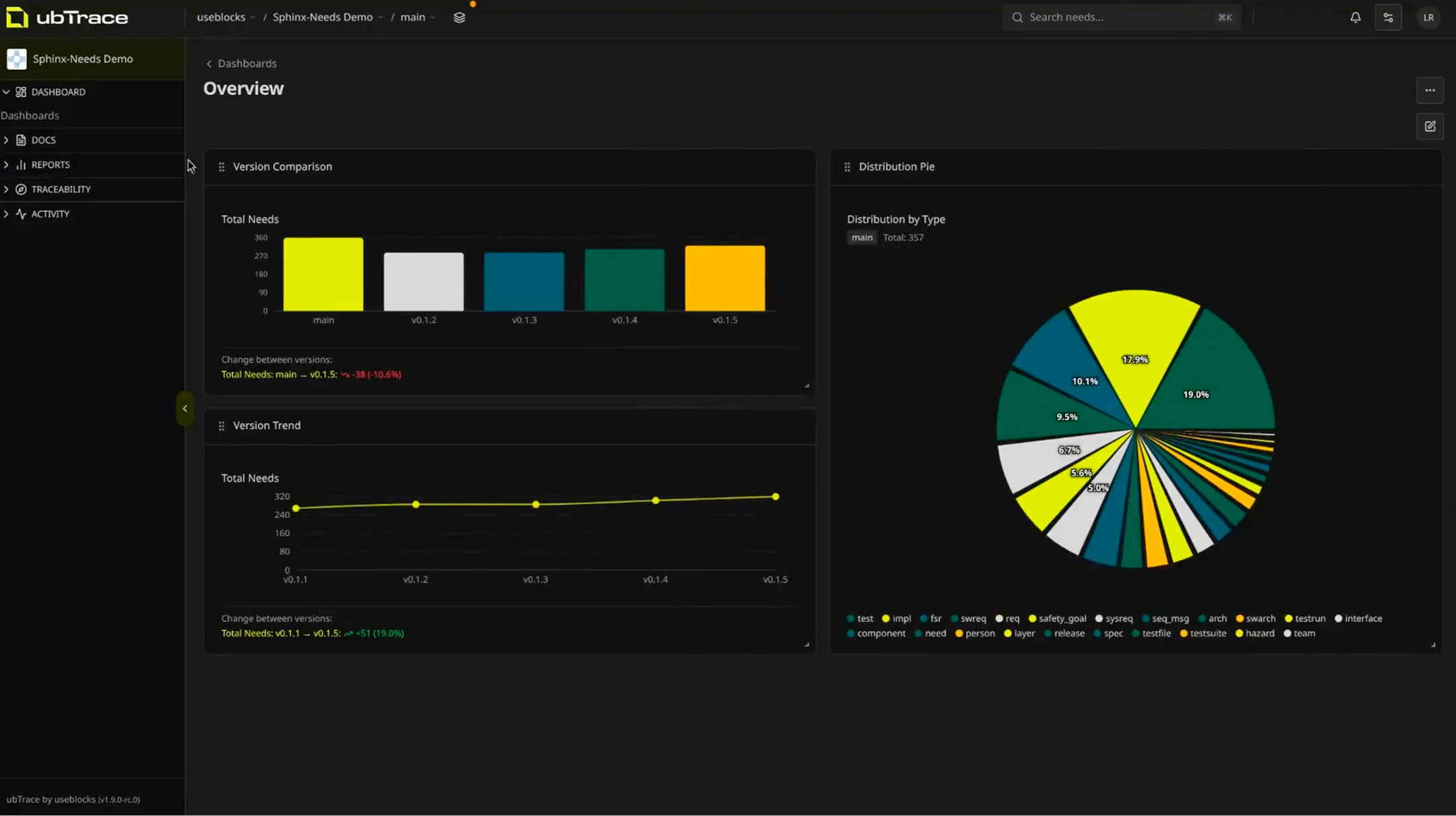
Analytics & Management
An ALM that reads from your repo, not one you manually feed.
One live model of the project – structure, coverage, and risk read straight from the work. Live-generated status reports according to your standards show the true state.
seamless integrations for effortless workflows






Why teams use useblocks
5x
Faster requirement
linking
577
Hours saved per
developer/year
10x
Faster release
cycles
80%
Reduction in
documentation time
We’ll show you how to turn fragmentation into unified clarity
See how useblocks can boost your teams productivity - safe, reliable and trustable.

About us
We created the industry-standard data model that safety-critical teams trust. Now we build upon that foundation.
We are engineers who spent years building safety-critical projects, watching brilliant teams lose weeks to broken toolchains and audit prep. useblocks is the platform we wanted and couldn't buy, with features we couldn’t have imagined back then. It is built by the people who've felt the problem, for the people still living it.
Frequently asked questions
Common questions about useblocks, the intent layer, and how we fit into safety-critical workflows.